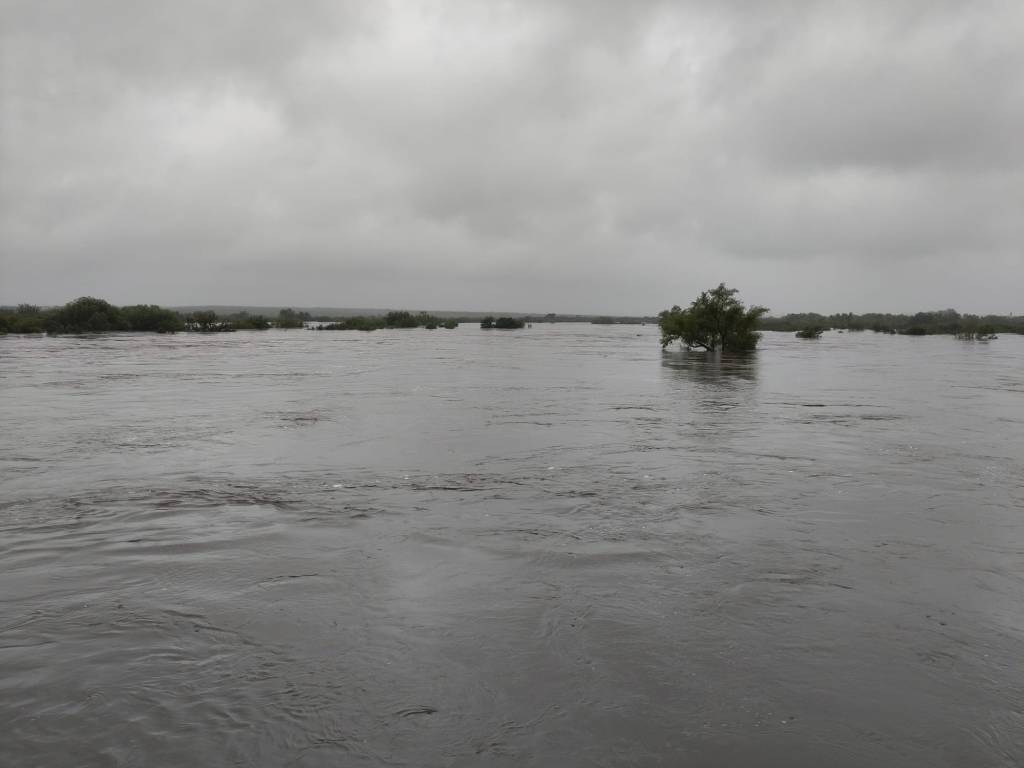
(The Rio San José from the Valdés bridge about 10-15 kms upstream from our farm on Saturday 16 March 2024. There was little room left between the bridge and the water.)
I have been wanting to write this blog for days now, probably rather weeks. Things have been rather intense and hectic. We went and spent some days in Montevideo in early March, mostly so that I could have the highest probability of having a safe internet connection for our final #WATERAGRI event in Brussels with delegates from the European Commission. We presented results from the EU Horizon 2020 project that may have relevance on policies such as suggested subsidies for the implementation of constructed wetlands or better alignment with gender mainstreaming also in the agricultural sector (which also in Europe is still largely male dominated both in land management as well as in land ownership!). The event was a blast, and you can find some summary notes on the project’s LinkedIn site.
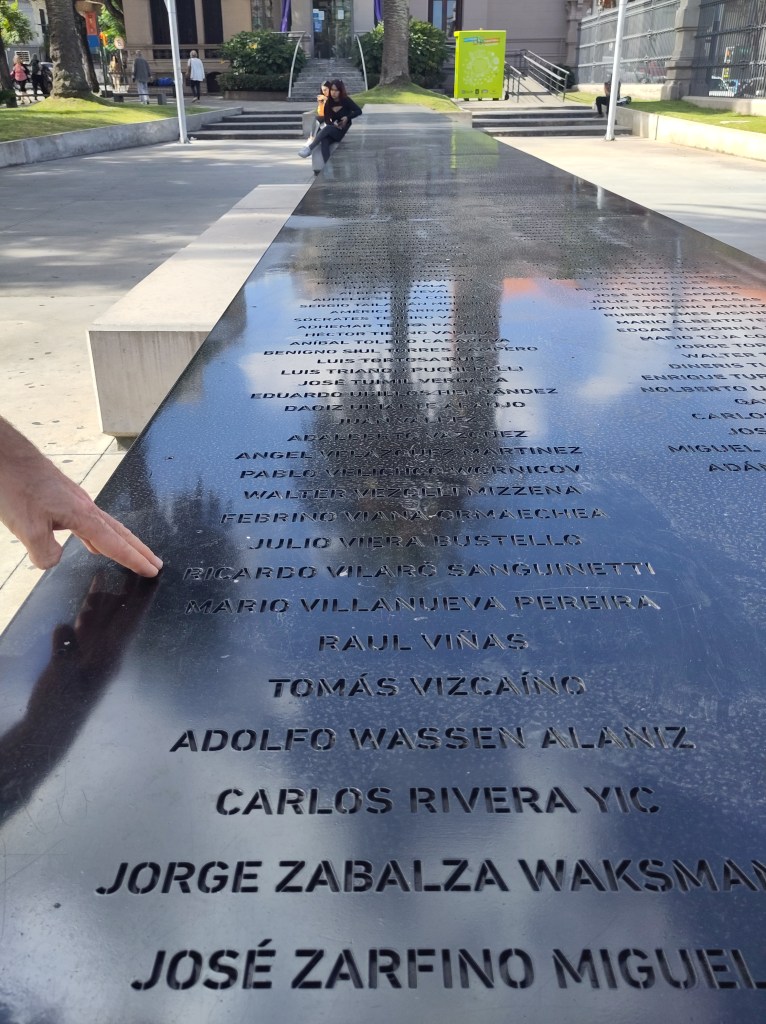
(My great uncle Ricardo Vilaró Sanguinetti was imprisoned as political prisoner in Punta Carretas – now a shopping mall … – during the Uruguayan dictatorship. His name is on this long list of names of the former prisoners. He survived and is alive to this day.)
From Montevideo, where we saw loads of family, we went to the beach to ready the house for friends that were to come from Europe to visit us. Unfortunately, their flight didn’t work out and thus we spent readying the beds (finding bedsheets that matched, and somewhat presentable towels…) probably for nothing, but hey, this what you do for friends. I returned by bus under the beginning of heavy rainfall. In 72 hours, we got more than 200 mm of rainfall and in some regions north (upstream of the farm) more than 300mm were registered. Record rainfalls that have turned our floodplain into a lake displaying the full blast of its functioning. 11,48 m was the river level at its peak in San José de Mayo which is about 50-60km upstream from the farmhouse. I sent pictures to my family and even generations past could not recall such high-water levels. In the city of San José several hundred people had to be evacuated, debates about river cleaning, dredging and removal of riverine vegetation followed and are now on the political agenda. We, me with some of the neighbours and politicians, also went in front of the press asking for the remainders of the infrastructure of last year’s water transfer project to finally be removed (after some of the construction containers were floating on the river like little boats…). It’s a tough year for environmental activism; there are presidential elections and environmental concerns are challenging to be presented without being thrown into political mud.
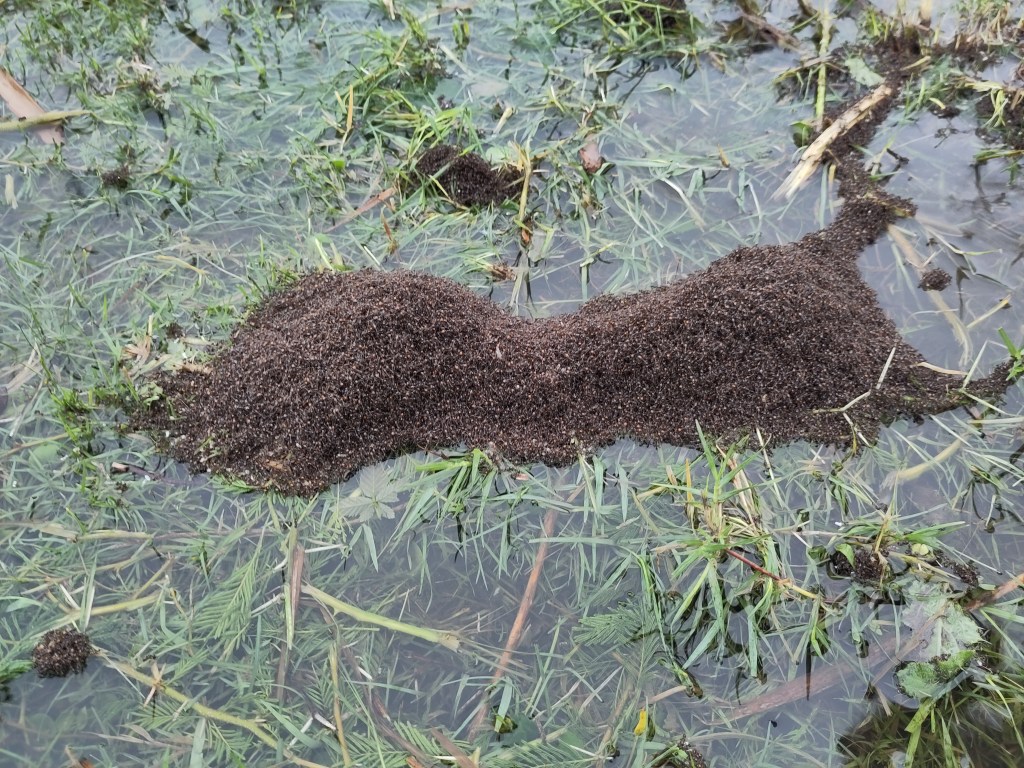
(Ants getting ready for the floods by building a floating raft where they continuously change position so none drowns and the eggs are always kept on top. Amazing spectacle.)
One of the very concerning issues that happened here recently is the discreditation of some of the local Uruguayan scientists of the Universidad de la República as witnesses in a trial against a new water abstraction plant that is planned on the riverbanks of the Rio de la Plata (Proyecto Neptuno in Arazatí). This new plant is heavily contested by NGOs, scientists, politicians and affected population. In an ongoing lawsuit against this project regarding its breach of the constitution (Uruguay has the human right to water enshrined in its constitution and has a law that mandates water provision for the population to be done through public entities solely, in order to avoid the privatization of water, which is not 100% clear in this project) several scientists were invited as witnesses and then denied to give testimony for being biased. One of the scientists, Luis Aubriot, has published extensively on the distribution of cyanobacteria and how it affects the coast of the Rio de la Plata and the Atlantic Ocean using remote sensing. One of the reasons why this abstraction plant is contested is because of the high frequency and high loads of cyanobacteria that affects this region. His internationally peer-reviewed (!!!) science was considered as biased!?! As I said, challenging times these days of presidential elections for evidence-based recommendations and statements.
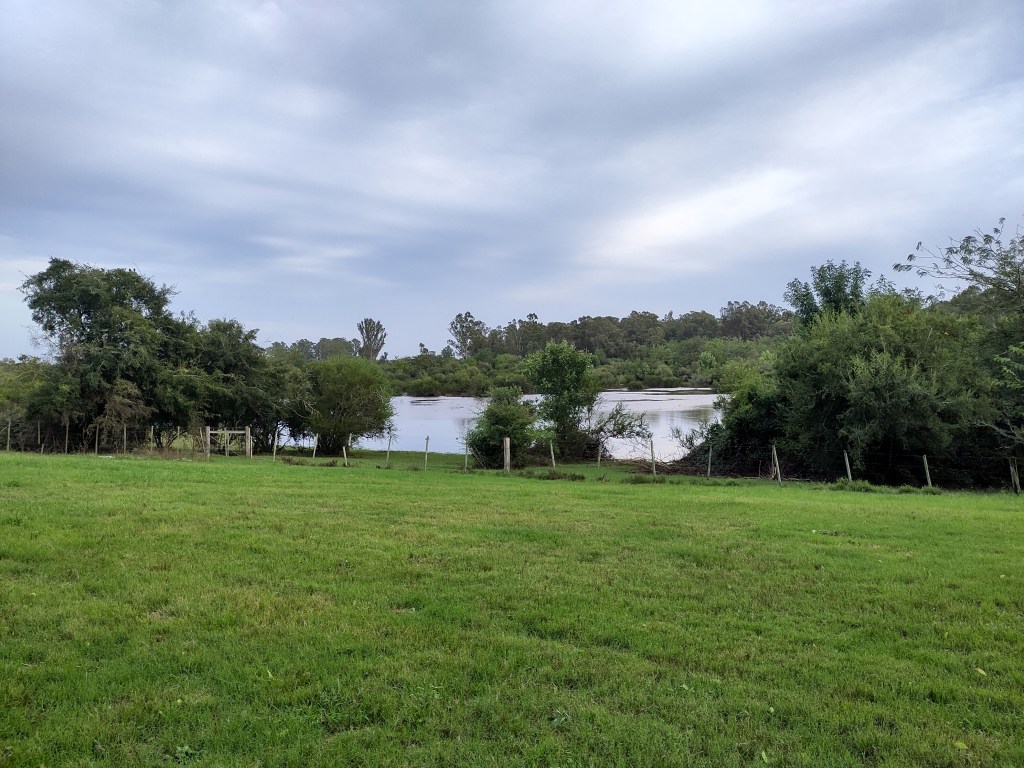
(‘Our’ floodplain filled to the brim again this morning 21 March. The river normally flows behind the high Eucalyptus tree line in the very back some 500+m away. Fantastic spectacle that I enjoy every time it happens. The last large flood was in 2019.)
And while the water was slowly dwindling again over the weekend renewed heavy rainfalls on Tuesday and Wednesday made the waters return. Now, I even have some ducks that appear on my ‘lake’. And the water hyacinths will most likely be gone after this – some rafts were seen floating by along the beaches in Montevideo some 70-100 km downstream from where we are. We salvaged our wildlife cams from the riverbanks (they would have been completely under water) and put them up next to the house at the edge of the flood. Last night we ‘caught’ some deer on film and found some fresh carpincho/capybara poop. The eternal foxes are accompanying us, and other smaller mammals were filmed that we haven’t been able to identify. This weekend we are excited to welcome friends and family to my mom’s farmhouse for our wedding celebrations. This house has belonged to my mom’s family for several generations now and many family members have memories of time spent here – of making flower arrangements, learning how to swim in the river, canoeing and picnicking, or simply spending some time away form the madness of other people. We will add another piece to these memories by spreading some love 😊
Oh, and happy World Water Day (22 March). Don’t forget to say hello to your local floodplain and thank it for the service it provides to you every day, from flood protection to drinking water supply, ecological hotspot and recreational area, or very simply for being there for the sake of being there.

 Tamara Avellán
Hinterlasse einen Kommentar