This year is full of winter solstices. Well, at least this is my assumption. This past winter solstice last week was actually fairly bright and shiny. We have had some wintery conditions with temperatures below +15°C, cold gusts of wind but mostly rain, fog and lots of humidity. While the temperatures might not get as cold as in central and northern Europe the high humidity creeps into the walls, the bed sheets, your clothes and eventually into your bones. My rescue is our amazing oven-furnace-heater, lovingly called José Pedro, and my electric heating blanket. I travel with a hot water bottle. Since most places have poor heating you never really get warm. It’s cold inside but it’s not warm enough inside to get warm. The best places are sometimes the outer city buses which are comfortable and are heated.
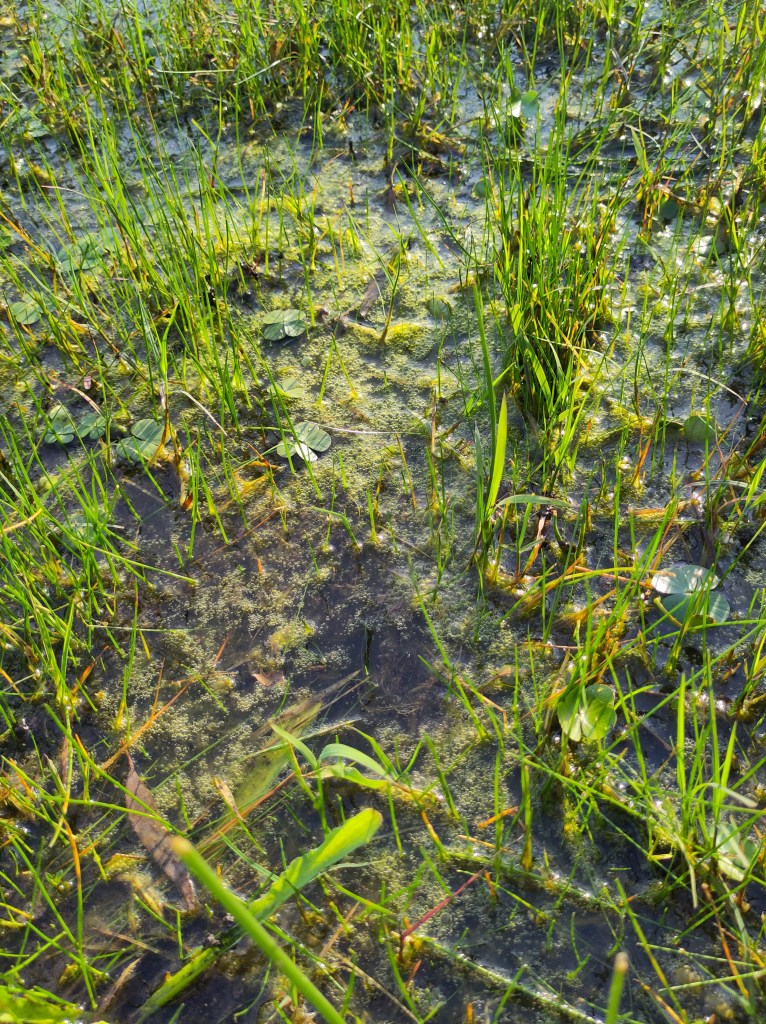
For this winter solstice, we invited the big family to the farm to celebrate the passing of the season with us and to further reduce the meat and wine left-overs from our wedding party. It has been raining a lot, so roads are in poor conditions and our floodplain has been soaking wet for weeks on end now. The endless runoff from the fields combined with the remainders of the floods have fertilized the puddles to the degree that they have turned green with algae. My hope is that the floodplain habitat will be able to cope with this excess. But how much more can it take? When will it reach the point of nutrient saturation? I am not sure.
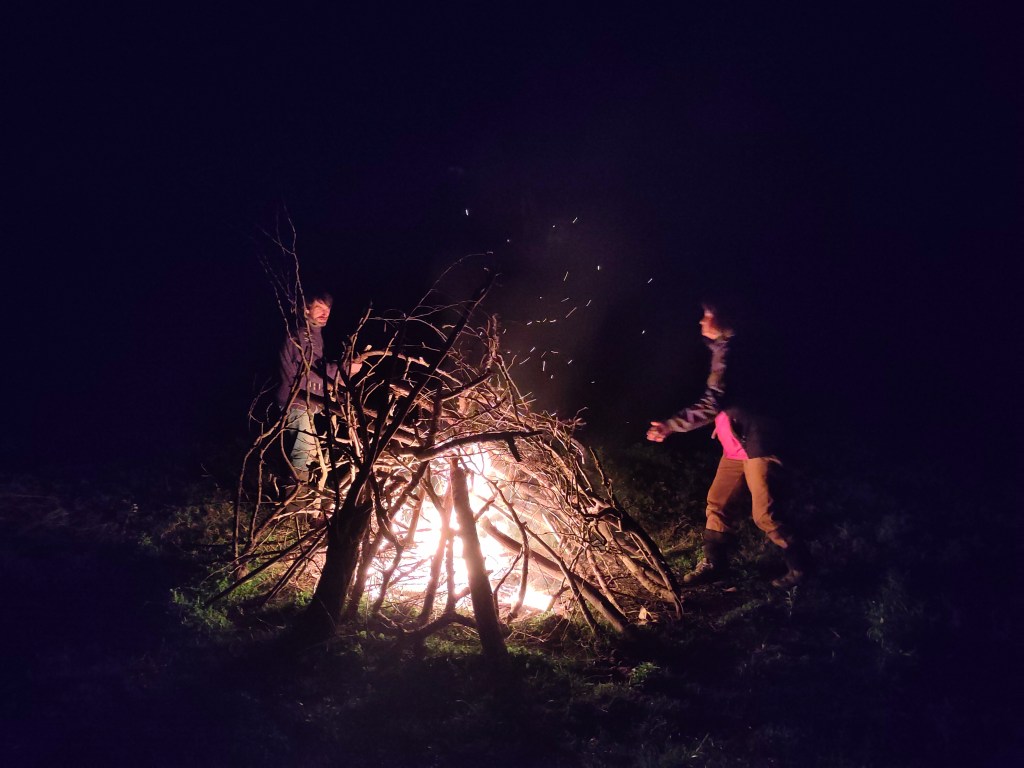
We had a lovely Sunday; the weather was actually gorgeous, and we had a fantastic picnic outside on the terrace. What I do love about winters here is that when the sun makes its appearance and the wind isn’t so strong, it is actually quite warm, almost like a European spring day. We even set up a large bonfire to celebrate Saint John’s Day, somewhat of a tradition here, and also in honour of my father (called Juan). Ron, my aunt and I were working the bonfire like little children, playing with the burning sticks to make the fire sparkle and glow brighter. What fun! The stars were twinkling above, and the almost full moon came out behind the tress to greet us. For me winter solstices mark an ending where I take stock of the past year (or half year in this case) and release the experiences, desires, visions, dreams and pains for the universe to do its thing. This time, I released the dream of being able to set up trails until September. The funds I had applied for have not materialized and thus I am readjusting my ambitions.
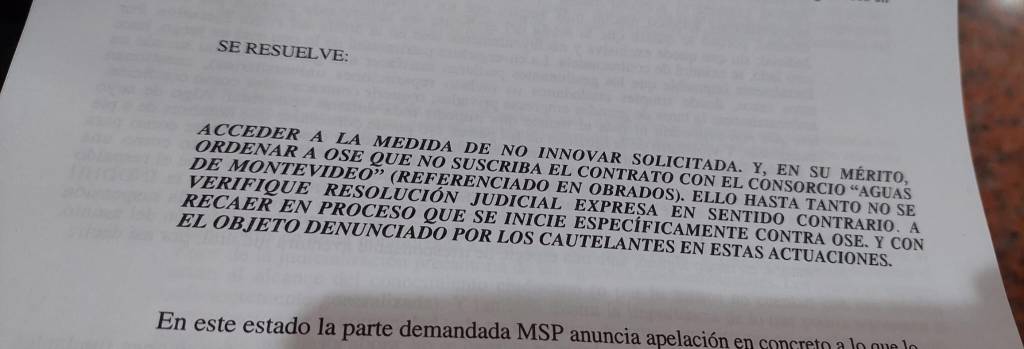
As such I will be spending our remaining two months here focusing on outreach campaigns for a local NGO grouping that has joined forces to stop a private drinking water initiative. Today, in fact we/they have won a great legal victory. The courts have decided that, for now the project, cannot go forward and the governmental entities cannot sign the construction and other related contracts until it has not been analysed in more detail if the project is in line or not with the Constitution. Uruguay’s right to water is enshrined in its Constitution and water supply and provision should not be privatized or be treated as an economic good. This same issue of commercialization also applies to the green hydrogen production and its export that is being pushed forwarded forcefully by the current government without disclosing the contractual agreements, much to the liking of European interests of France and Germany for instance.
While one of my MSc students from Uppsala University, Sweden, this year showed that both the German and the Uruguayan Green Hydrogen Strategies take aspects of social and environmental justice into account it is unclear if, in their implementation, these dimensions will be implemented and monitored. As often, it sounds all great on paper but as we know participatory processes when done right are tough and may result in the decision to NOT do something. Most often than not, however, we experience fake or shallow participation where citizens are called in to voice their opinions but where these will not be taken into account. This, we know in science, leads to stakeholder fatigue and in the grand scheme of things a decline in trust of the population towards government and democratic processes in general.
I am also aware that real, deep participation takes immense amount of time and resources from all parties involved. Interests of stakeholders are rarely aligned, and these deliberative processes can feel like they are not leading anywhere. In our overdrive world, I sometimes wonder if more participation really is the key to our seemingly ailing democracies. Getting all stakeholders up to par in terms of basic scientific or other knowledge about the subject at hand to even have an opinion about the matter to then be able to take a meaningful decision already takes up so many resources. Resources and time that are then maybe missing in the governmental realm for control of other (environmental) aspects such as protection of ecosystems against illegal hunting or forest destruction, or measurement and analysis of environmental quality control parameters such as water.
What was very interesting in the judgment in the case of Arazatí was the emphasis on the one hand about the Constitution, but on the other hand also about the concept of national defence and water being a crucial and fundamental resource to be regarded and guarded as a critical resource. The Ukraine war has put the concepts of critical infrastructures back on the table in the USA and Europe including water supply and sanitation related infrastructure. Here in Uruguay, half the country’s population (1.5 million people) lives near or around the capital. They are supplied from ONE source (the Santa Lucia River basin) and through ONE water treatment plant. One could even argue now, that putting all eggs in one basket here is a bad idea, as was clearly seen last year during the drought. Now, there are probably many examples like this around the world, but just as an individual counter example, Dresden with less than half of the population described above has at least two different sources (arguably three) and at least four different water treatment plants. Of course, also here controversial water usages exist as the newly installed Chip-producing companies will be using partially the same water supplies as those for human consumption potentially putting human needs at risk.
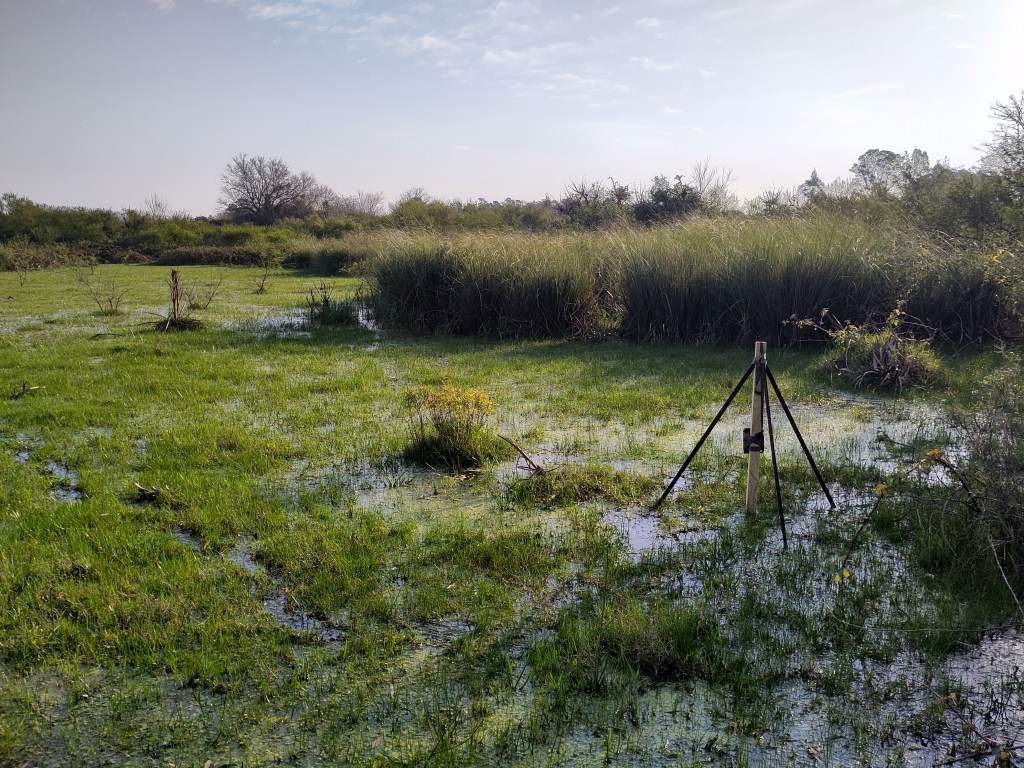
Thus, as the second half of the year begins, I am grateful for the closures and hopeful for new ventures. As for my ecotourism project, for now, I will set up a sign in front of its entrance explaining that this is not an abandoned lot but a habitat in recovery. I will put together a small video that shows the different species that I have encountered here and, in its neighbourhood, with the hope that this will not be used as an invitation for hunters to go find Leopardus spp. but rather as an insight for visitors and passers-by to get to know more about their wildlife. I know there is a need for this. The policewoman I reported the theft of one of our wildlife cams to (yes, hunters…) was very much surprised to hear about all the animals we had been able to see here. Maybe there are more curious police(wo)man out there that may thus develop a larger interest in protecting also the environment from theft.

 Tamara Avellán
Hinterlasse einen Kommentar