This is actually already Blog#12!!! Never thought I would write so much 😊
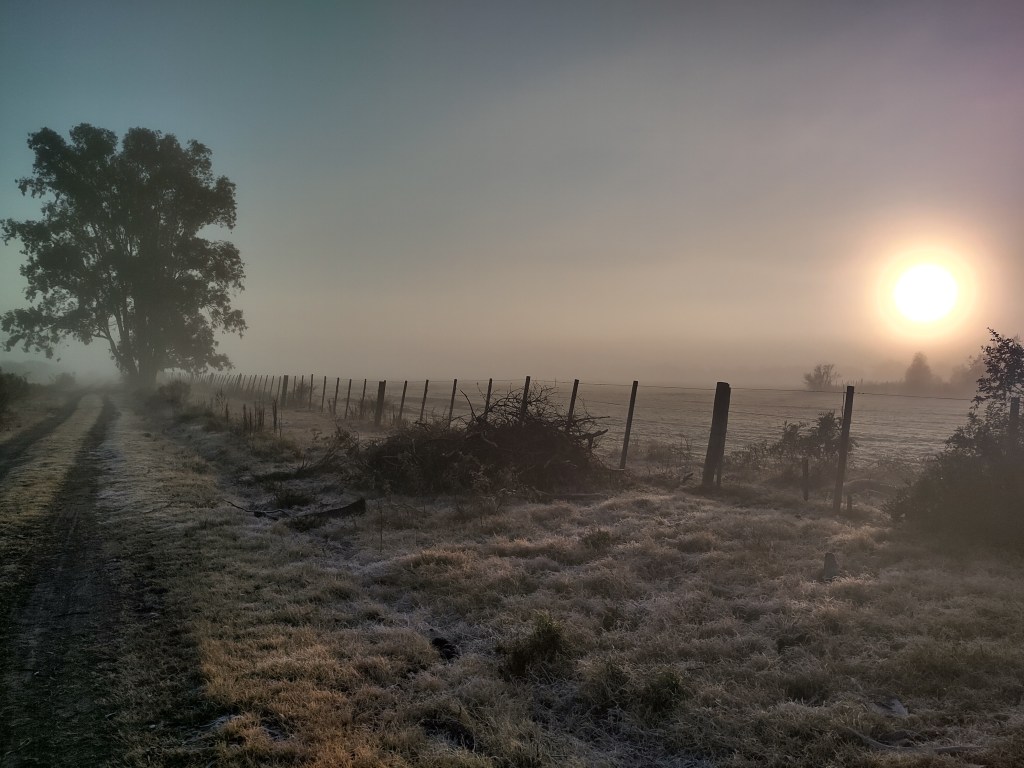
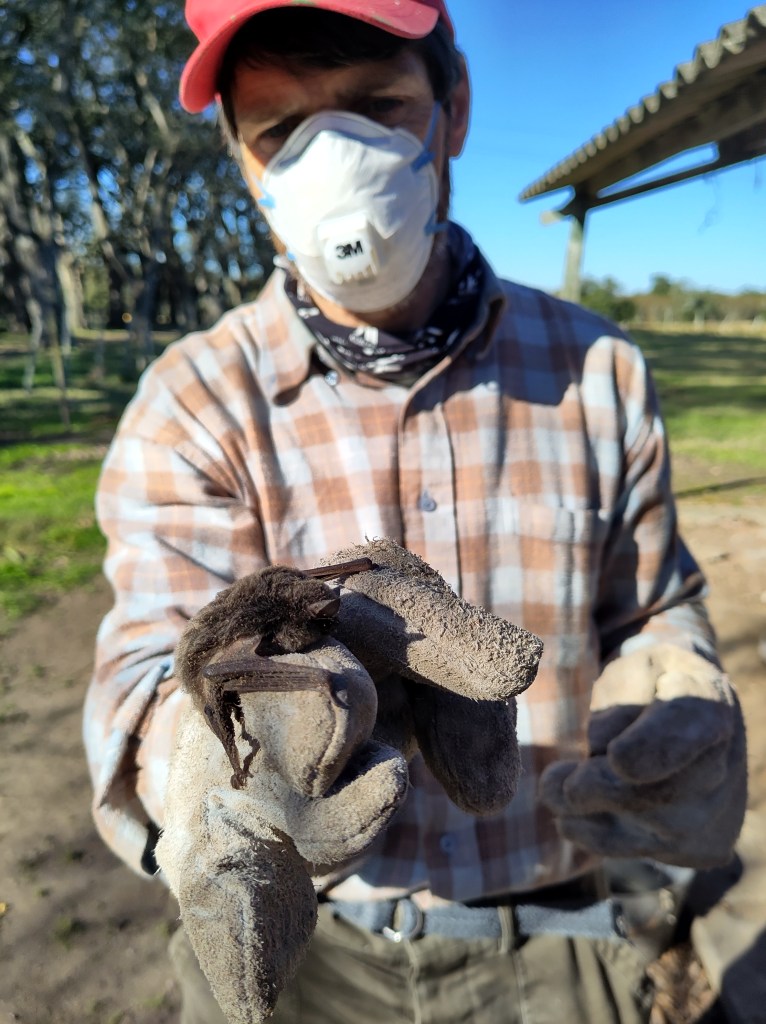
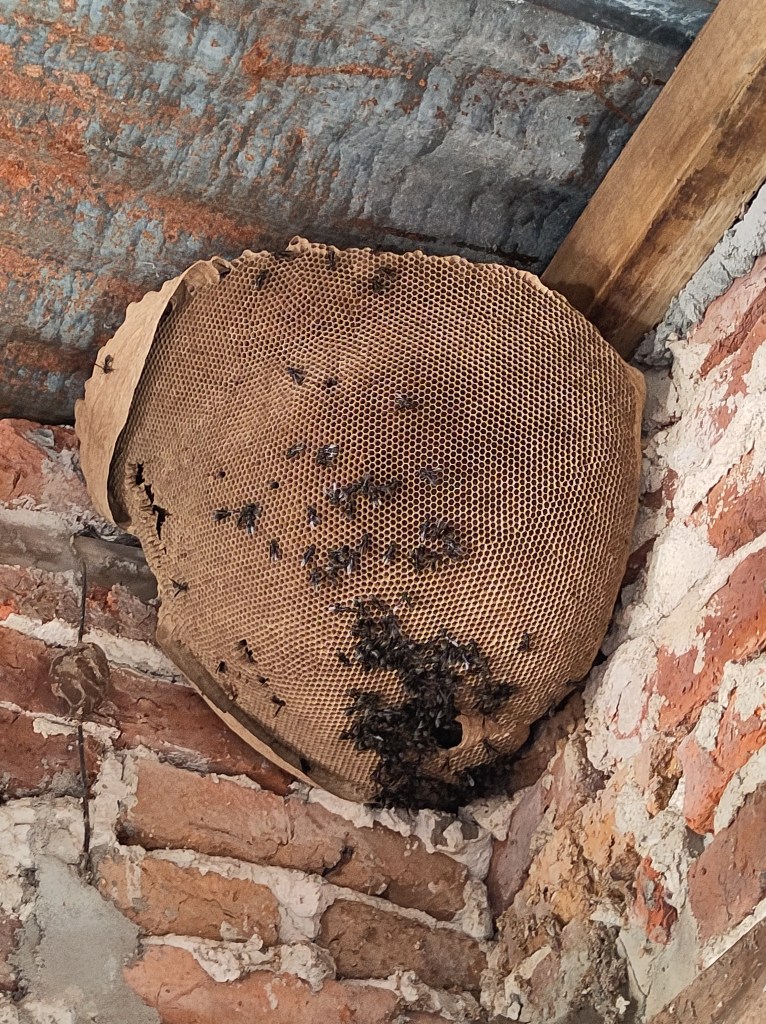
It feels like Ron and I have been collecting trash, cleaning out houses, and generally cleaning for most of the past 6 months. We finally figured out that the garbage collecting entity of the city of Libertad actually also comes out to us to the countryside to pick up any trash you have been accumulating. In our case, they came this past week and took two truck loads of garbage that we had pulled out of the countryside and the little houses that are on the farmland. Somehow in the past decade or so garbage just multiplied itself and never got taken away. Now everything is trash free again and we designated a particular area of the former milking parlour as the trash collection area for future truckloads. While cleaning out one of the little houses last week, we encountered a lovely wild beehive and some bats that were hibernating underneath the roof. It’s been quite cold in the past two weeks, with a full seven days of freezing temperatures at night in a row. Some areas in Uruguay even got to build their own little snowmen from the frost. Frosty mist covered the mornings into a surreal landscape.

Biodiversity was also the topic of a workshop I attended last week organized by the Ministry of Environment. I am no big fan of the Minister nor of most of the directors, but the technical staff has mostly remained the same from previous governments and I was very pleasantly surprised about their professionalism. The workshop intended to prioritize the Kunming-Montreal Biodiversity targets of the UN Convention on Biological Diversity for the Uruguayan context and to also take stock of the progress made during the last reporting period of the Aichi targets and the respective Uruguayan biodiversity strategy. The workshop held in Montevideo was the last of a series of five workshops that had been held all over the country to gather the diverse viewpoints of other governmental officials, NGOs, and interested parties. The full day workshop took place mostly in several small working groups of some 10 people each and allowed for ample time to discuss but also to provide some real recommendations. Not to be haughty, but I couldn’t have organized it any better than they did. If I now actually also receive a summary of the findings and recommendations next week, I will be very impressed with the sophisticated level of participation that the Ministry undertook here to be able to present a consolidated view on biodiversity to the global community.
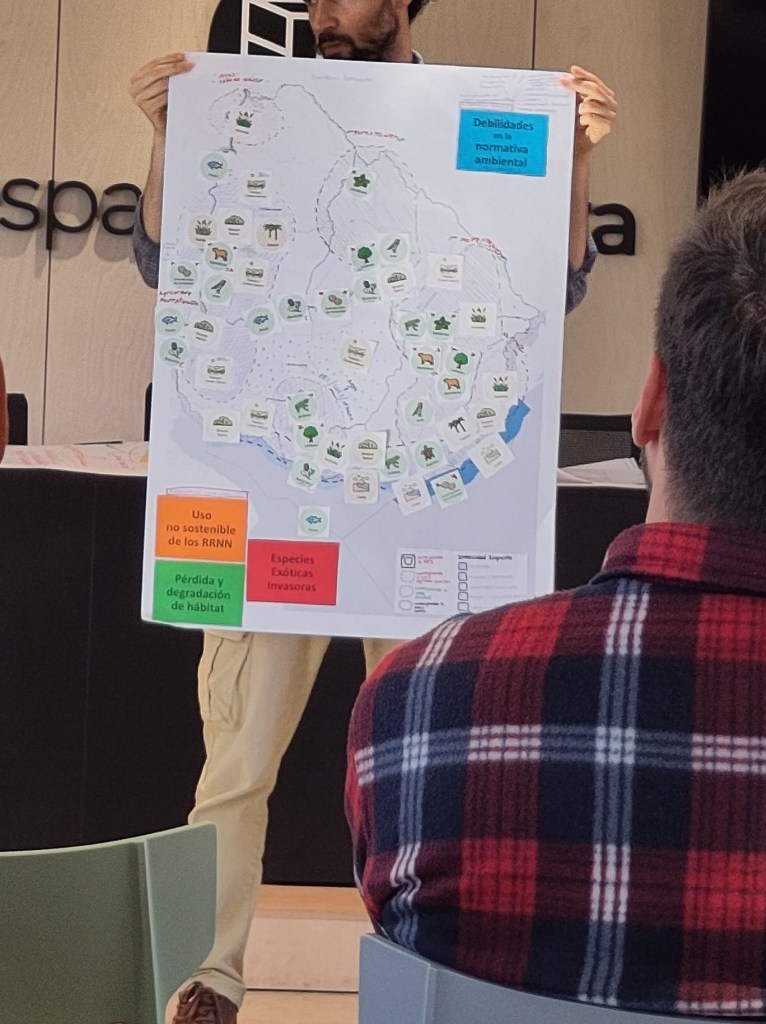
In my research, I often face the challenge of judging the level of capacity of the stakeholders to engage in participatory processes and to adjust the type of participatory activities to this capacity level. Small group work is usually ideal to elicit feedback from almost all participants, while plenary discussions are often dominated by the talkers (people like me). But in cultural contexts where small group work is not common and has no history of being applied, imposing these kinds of activities may not yield any meaningful results. It’s been my experience that small group work is well received in the South American context, and I must admit I really enjoyed being a participant for once and not a facilitator or moderator. I could just put out my knowledge and my opinion – such a welcomed change.
One of the targets that our group got to discuss in more detail had to do with the reduction of contamination and when comparing it with the current Uruguayan biodiversity strategy only a mention to water quality measurements were made. These are very poor and have only been expanded slightly in the past. Air, soil or marine environments were not even considered. I have been wondering how a country half the size of Germany with the population of the order of magnitude of Berlin can actually assess, monitor and protect its biodiversity with almost all land area being in the hands of private landowners. With less than 1% of the territory being declared as protected area it is absurd to think they will reach 30% by 2030. And even if, how many people do you need to control the protection? Central American countries with less economic power are (more?) successful in protecting their wildlife and working across private landowners working with the REDD+ program to financially support forest conservation (e.g. Guatemala). Uruguay started this in the previous government around 2018/2019. However, like many of the initiatives and laws that were passed in that legislative period, their implementation came to a complete standstill in this current government. It is tragic to see that all the collective (and often participatory) efforts of designing strategies and casting them into evidence-based laws and decrees are dissolved and vanish into thin air when the direction of government changes. It’s sad to see and one could feel the pain in the room at the workshop this past week of the community that had helped forge advanced conservation laws of natural resources and biodiversity. This year’s presidential elections are thus being awaited by all environmentalists here that I have been in contact with.
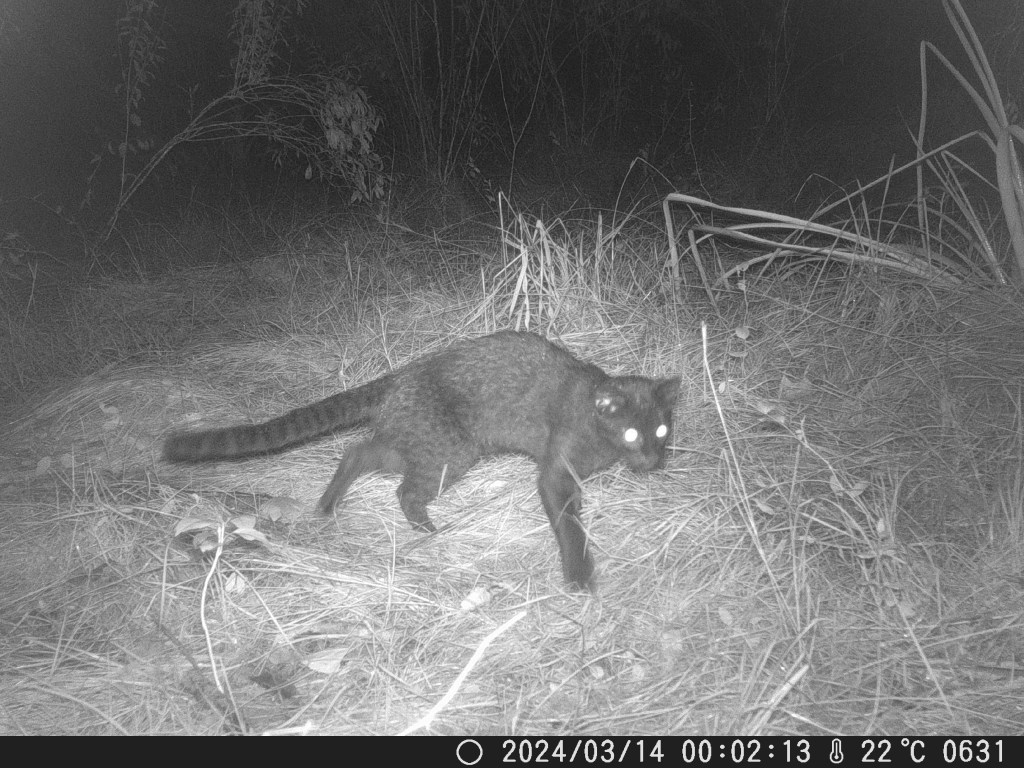
So, baby steps. If grand politics are stalled, work at the local level. So, I am taking our trash cleaning efforts to the next level and have mobilized the local Rotary Club to organize a river clean-up event with me, at the headwaters of the Flores Creek at the north-eastern edge of the town Libertad. This is the same creek that flows through the little forest that I intend to turn into an environmental education/eco-tourism locality, and it’s also the same creek where we have been taking stunning pictures of wildlife, such as this beautiful Geoffrey’s cat. So, picking up the trash at the headwaters will hopefully reduce the amount of trash that trickles through the stream and of course, raise awareness of the local population about what habitats the garbage is potentially affecting. I am quite excited about this. It will be a first for this creek.


 Tamara Avellán
Hinterlasse eine Antwort zu FriedrichVonPawlowska Antwort abbrechen